

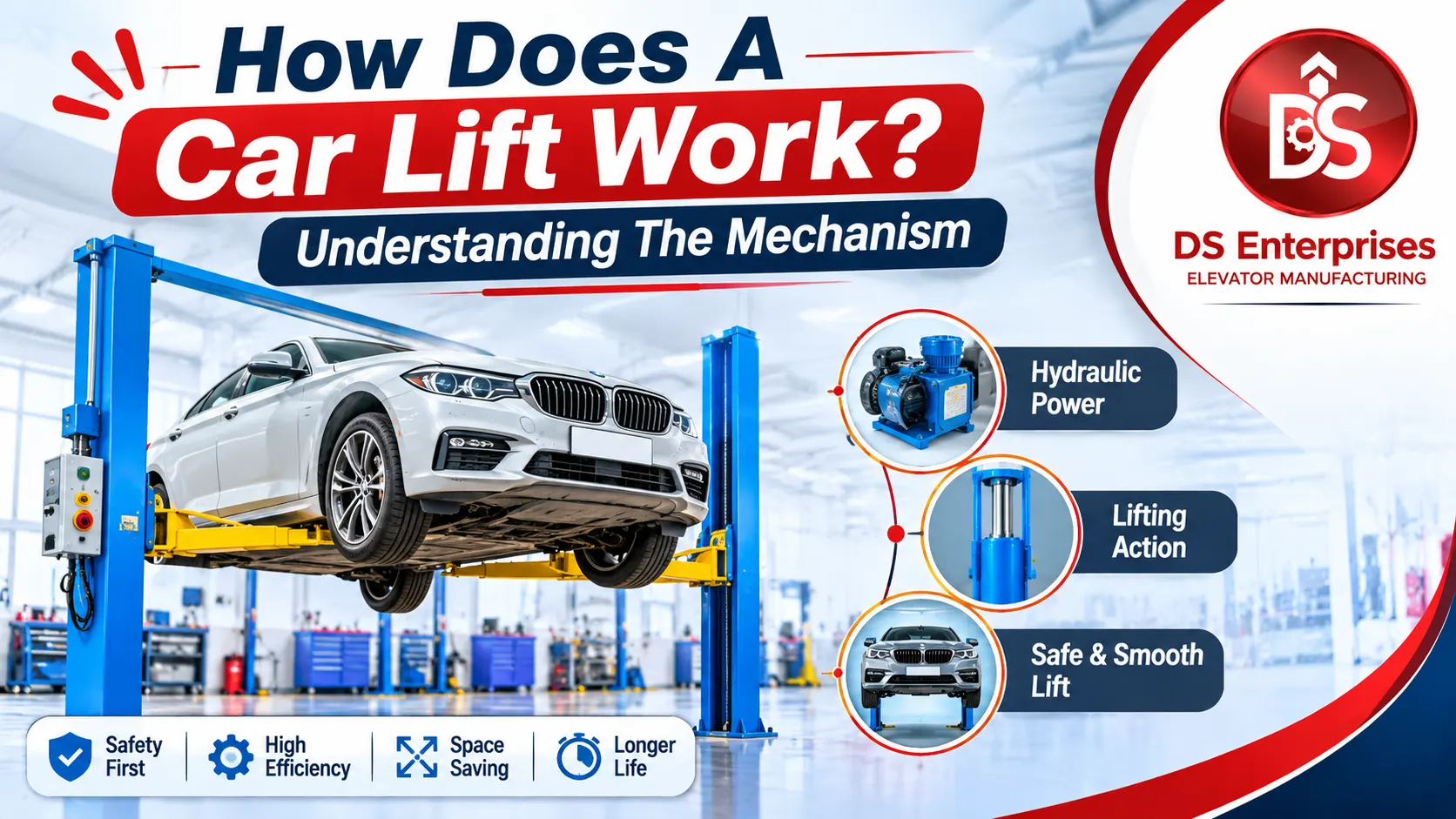
A car lift is an essential piece of equipment used in automotive workshops, service centers, parking facilities, and commercial buildings. It helps raise vehicles safely to a suitable height, making it easier to perform maintenance, inspection, repair, and parking operations. DS Enterprises is a trusted name that focuses on providing practical lifting solutions designed to support efficient vehicle handling and smooth operations.
Modern car lift systems are developed with advanced lifting mechanisms, safety features, and durable construction. Whether used in an automobile workshop or a multi-level parking facility, a car lift offers convenience, saves space, and improves overall working efficiency. In this article, we will explore the working mechanism of a car lift, its major components, different types, and the benefits it provides.
Mechanism of a Car Lift
A car lift works by using a mechanical, hydraulic, or electrical system to raise and lower a vehicle. The lifting platform or supporting arms hold the vehicle securely while the lifting mechanism moves it vertically. In a hydraulic car lift, hydraulic fluid is used to generate the force required for lifting. When the motor operates the hydraulic pump, pressurized oil flows into the cylinder. This pressure moves the piston upward, raising the platform or lifting arms. When the vehicle needs to be lowered, the hydraulic fluid is released in a controlled manner, allowing the piston to move downward.
These systems offer reliable operation and can be suitable for different automotive and parking applications. DS Enterprises understands the importance of selecting a suitable car lift mechanism based on vehicle weight, available space, and operational needs.
How Does a Hydraulic Car Lift Work?
Hydraulic car lifts are widely used in automotive workshops because of their reliable performance and lifting capacity. The process starts when the vehicle is positioned correctly on the lifting platform or arms. The operator activates the lift using a control panel or operating switch. The hydraulic pump then moves oil into the hydraulic cylinder. As the oil pressure increases, the piston begins to move upward. This upward movement transfers force to the lifting platform, allowing the vehicle to rise smoothly. Once the vehicle reaches the required height, a mechanical safety lock or another approved holding system helps secure the lift.
To lower the vehicle, the operator activates the lowering control. The hydraulic system releases the pressure gradually, allowing the platform to descend in a controlled manner. This mechanism helps provide smooth movement and convenient vehicle handling. A properly designed hydraulic car lift can offer excellent performance for routine servicing, underbody inspection, tire replacement, and other workshop activities.
Important Components of a Car Lift
A car lift consists of several components that work together to ensure safe and efficient lifting operations.
1. Hydraulic Cylinder
The hydraulic cylinder is responsible for converting hydraulic pressure into lifting force. It plays an important role in raising the vehicle and maintaining smooth platform movement.
2. Hydraulic Pump and Motor
The pump creates the required oil pressure, while the motor powers the pumping operation. These components help the car lift operate efficiently.
3. Lifting Platform or Arms
The platform or lifting arms support the vehicle during the lifting process. Their design depends on the type of lift and the vehicles it is intended to handle.
4. Control Panel
The control panel allows the operator to manage lifting and lowering operations. It provides convenient access to the operating controls.
5. Safety Locking System
Safety locks help prevent unwanted platform movement while the vehicle is raised. These systems are essential for supporting safe workshop operations.
Different Types of Car Lift Systems
Car lifts are available in different designs to meet the requirements of various applications.
Two-Post Car Lift
A two-post car lift uses two vertical columns with lifting arms to support a vehicle. It is commonly used in automobile workshops for repair, inspection, and maintenance activities. Its design provides convenient access to the vehicle’s underside.
Four-Post Car Lift
A four-post car lift features four supporting columns and a platform or runway system. It offers stability and is suitable for vehicle servicing, storage, and certain parking applications.
Scissor Car Lift
A scissor lift uses a connected arrangement of metal supports that move in a scissor-like pattern. It is useful in workshops where space efficiency and convenient lifting are important.
Car Elevator
A car elevator is designed to transport vehicles vertically between different floors of a building. It is commonly installed in residential complexes, commercial buildings, and multi-level parking facilities. A car elevator offers an effective solution where ramps are difficult to construct or available space is limited.
Benefits of Using a Car Lift
A modern car lift offers several advantages for automotive businesses and parking facilities.
- Space Optimization: Car lifts help utilize available space efficiently, especially in workshops and multi-level parking structures.
- Improved Productivity: Vehicles can be raised quickly, making maintenance and inspection tasks more convenient.
- Better Accessibility: Technicians can easily access the underside of vehicles for servicing and repairs.
- Convenient Vehicle Handling: Lifting systems simplify the movement and positioning of vehicles in suitable applications.
- Reliable Performance: Properly designed and maintained lifting equipment supports consistent operation.
Safety Considerations While Operating a Car Lift
Safety is an important part of every lifting operation. Before using a car lift, the operator should ensure that the vehicle is positioned correctly and its weight is within the rated lifting capacity. The lifting arms or platform must be properly aligned with the vehicle’s designated support points.
Operators should also inspect the equipment regularly, check the hydraulic system for leaks, and ensure that safety locks are functioning correctly. Vehicles should never be lifted beyond the equipment’s specified capacity. Routine maintenance and trained operation help reduce the risk of accidents and improve equipment life. DS Enterprises emphasizes the importance of selecting suitable lifting equipment for the intended application. Proper installation, regular inspection, and responsible operation are essential for maintaining reliable performance.
Why Choose DS Enterprises for Car Lift Solutions?
DS Enterprises focuses on providing practical solutions for vehicle lifting and handling requirements. Choosing the right car lift depends on factors such as vehicle dimensions, load capacity, installation space, and the intended purpose. A suitable lifting system can help businesses improve workflow, enhance space utilization, and simplify daily operations.
Whether a facility requires a car lift for an automotive workshop or a car elevator for vertical vehicle transportation, selecting equipment that meets operational and safety requirements is essential. With the right lifting solution, businesses can make vehicle handling more convenient and organized.
A car lift works through a carefully designed mechanism that uses hydraulic pressure, mechanical components, or electrical systems to raise and lower vehicles. Its major components, including the hydraulic cylinder, motor, lifting platform, and safety locks, work together to provide controlled movement. DS Enterprises offers lifting solutions that can support the needs of automotive workshops, parking facilities, and commercial establishments. Understanding the working mechanism of a car lift helps businesses make informed decisions and select equipment that delivers efficiency, convenience, and dependable performance.