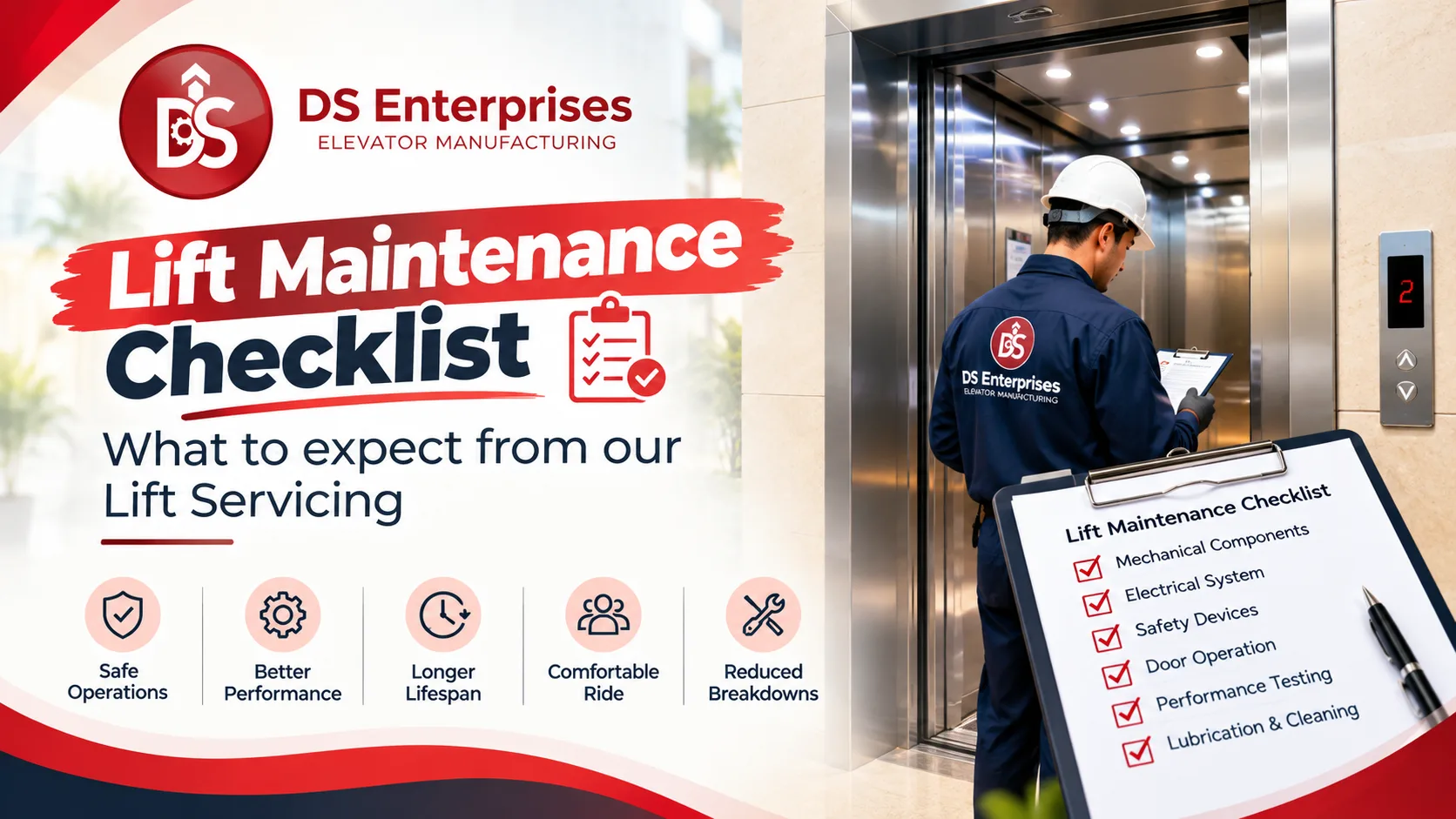
DS Enterprises understands that lifts are an important part of modern residential, commercial, and industrial buildings. A properly maintained lift provides smooth operation, better reliability, and a more comfortable experience for passengers. Regular lift maintenance is therefore an essential part of keeping the elevator system working efficiently and identifying potential issues before they become major problems.
At DS Enterprises, lift servicing is approached through a practical and systematic checklist. Our team focuses on important mechanical, electrical, safety, and operational components so that the lift can continue to perform reliably during everyday use.
What Does Lift Maintenance Include?
Lift Maintenance involves regular inspection, cleaning, adjustment, testing, and servicing of different elevator components. The exact maintenance requirements can vary depending on the lift type, usage, age, and installed system.
During a routine service visit, technicians inspect important components and look for signs of wear, unusual noise, loose connections, or other conditions that may affect performance. This helps keep the lift in better working condition and supports timely maintenance.
Inspection of Lift Doors
Lift doors are among the most frequently used components of an elevator. During servicing, the door opening and closing mechanism is checked for smooth movement. Technicians may inspect door tracks, rollers, sensors, locks, and related components. Proper door operation is important for comfortable and dependable lift usage.
Checking Electrical Components
Electrical systems are an important part of lift operation. The maintenance process includes checking relevant electrical connections, control components, switches, wiring, and other accessible parts of the system.
Any unusual indication, loose connection, or component requiring attention can be identified during inspection. Regular checks can help maintain consistent operation and reduce unexpected interruptions.
Examination of Safety Components
Safety systems require particular attention during lift servicing. Depending on the lift configuration, technicians may inspect safety switches, door interlocks, emergency systems, alarms, and other safety-related components.
The objective is to ensure that these systems are properly maintained and that any identified issue is addressed through appropriate servicing or repair.
Checking Lift Motor and Machine Components
The motor and associated machine components play an important role in moving the elevator. During maintenance, technicians can check for unusual sounds, vibration, lubrication requirements, and visible signs of wear.
Regular inspection can help identify developing mechanical issues and support smoother lift operation.
Lubrication and Cleaning
Some moving components require appropriate lubrication to operate smoothly. During scheduled servicing, relevant parts are cleaned and lubricated according to their requirements.
Cleaning also helps prevent the accumulation of dust and dirt around important components. A clean and properly lubricated system can support smoother day-to-day operation.
Inspection of Lift Ropes and Mechanical Parts
For applicable lift systems, ropes and other mechanical components are inspected for visible wear or abnormalities. Pulleys, guide components, and related parts may also be examined depending on the lift design.
If a component shows signs that require further attention, the maintenance team can recommend the appropriate next step rather than allowing the issue to develop unnoticed.
Testing Lift Performance
After inspection and servicing, the lift can be operated and observed to check its general performance. Technicians may pay attention to starting, stopping, leveling, door movement, unusual sounds, and overall ride behavior.
This practical testing helps confirm whether the lift is functioning as expected after routine maintenance.
Emergency and Communication Systems
Emergency features are another important part of a maintenance checklist. Depending on the installation, technicians may check emergency alarms, communication systems, emergency lighting, and other related facilities. These systems should remain accessible and functional so that occupants can use them when required.
What Can You Expect from DS Enterprises?
DS Enterprises aims to make lift servicing straightforward and dependable for building owners, facility managers, and other customers. Rather than focusing only on immediate faults, the maintenance process considers the overall condition of the lift and its major components.
Our company can offer lift repair and servicing support according to the requirements of different lift installations. Regular service can help customers keep track of the condition of their equipment and address maintenance requirements in a timely manner.
Benefits of Regular Lift Maintenance
Improved Lift Performance
Regular lift maintenance helps keep the elevator operating smoothly and efficiently by identifying minor issues before they affect daily performance.
Better Safety
Routine inspection of doors, brakes, sensors, electrical connections, and other safety components helps maintain the proper functioning of important lift safety systems.
Reduced Unexpected Breakdowns
Scheduled servicing can help detect worn or damaged components early, reducing the chances of sudden breakdowns and inconvenient service interruptions.
Longer Equipment Life
Regular cleaning, lubrication, adjustment, and inspection can help reduce unnecessary wear and support the longer service life of lift components.
Lower Repair Costs
Identifying small maintenance issues at an early stage can prevent them from developing into larger problems that may require more extensive repairs.
Consistent Ride Quality
Properly maintained lifts can provide smoother starting, stopping, leveling, and door operation, creating a more comfortable experience for passengers.
A lift maintenance checklist is more than a routine inspection. It is a systematic approach to checking the condition and performance of an elevator and its essential components. From doors, electrical systems, and safety features to motors, ropes, lubrication, and performance testing, each part contributes to reliable operation.
With DS Enterprises, customers can expect a practical servicing approach focused on regular inspection, maintenance, and timely attention to identified issues. Properly planned lift maintenance can help extend equipment service life, support smoother operation, and provide greater confidence in everyday lift usage.